


Printer
What is Printer?
A printer is an external hardware output device that takes the electronic data stored on a computer or other device and generates a hard copy.
Why Choose Us
Our Factory
We It focuses on the R&D and manufacturing of UV inkjet printers, and has a complete sales and after-sales service system.
Quality Control
High-precision marble platform is used for equipment calibration and inspection, micrometers, plug gauges, vernier calipers and other precise inspection tools are used for inspection and calibration.
Customer Service
We prioritize open communication to address our clients' specific requirements and deliver personalized solutions.
Technical Support
Our team of experts is available to assist with troubleshooting, answer technical inquiries, and provide guidance.


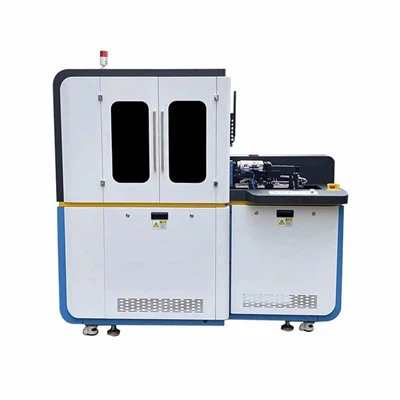


The advantages of glass cylinder printers are still many.Many cosmetic bottle manufacturers or cup manufacturers will need to use cylinder printers for customization.
1.The cylinder printer has bright colors,environmentally friendly,no odor,low curing energy consumption,and high curing strength;
2.The glass inkjet printer is simple to operate,efficient,and prints images quickly,meeting the needs of the market;
3.The cylindrical printer image is waterproof,wear-resistant,and does not fade;
4.The dual negative pressure system can provide a more stable negative pressure,and the ink supply is more stable;the glass inkjet printer can control the ink not to drip or flow back through the air pressure balance,and it can print with high precision and delicate symmetry.
How Start Printing onto Cylindrical Objects with a Flatbed Printer
A beaker, bottle, cup, or a coffee container—these are all very personal objects that we need as part of our morning routines, as a way to relax on an evening, or as a companion to our fitness and health. It's why they're such popular items to customize, and it's the reason why some sign and graphics businesses focus on printing on and profiting from these objects.
There are multiple ways to add graphics onto cylindrical objects as part of a digital graphics workflow. You can print and cut flexible bag media, foils, BOPP, PE, PET film, and offset printing stock to mount directly onto media with multiple types of large-format devices. However, the most direct and intuitive way to print onto cylindrical items, and the process I've outlined in this post is UV flatbed printing.
Cylindrical objects you can print onto with a UV flatbed
There are a lot of application options available to you with UV print technology. The following items represent opportunities in product prototyping, product packaging, giftware, sports and fitness accessories, and other lucrative sign and graphics markets.
Create high-end bottle packaging prototypes and short-run printed bottles for boutique packaging and product labeling.
Print on wine bottles, beer bottles, and other packaging items
A massive benefit of direct printing on glass bottles is that the finished bottles have a "painterly quality" that is unlike anything you can create with shrink wrap or traditional label printing.
Produce custom-printed drink containers as giftware items or corporate logo products. You can print on plastics and aluminum sports drink containers.
Other specialty graphics items like cylindrical tin boxes and even candles are unique media that you can customize with a flatbed.
The challenges of UV printing onto cylindrical objects
If you've ever used a UV flatbed printer to print to cylindrical items, you may have found that printing onto sports bottles, beer bottles, wine bottles, etc., is not a straightforward task. Even if you have a specially made print jig to preconfigure your print setup. Trying to print to a cylindrical object on a "flat" bed limits you to a small print area on each cylindrical item. It is subject to uneven ink distribution during printing. The problem is that the cylindrical object needs to physically turn during the print process so that the ink spray is applied evenly to the circular surface. This is where a fixture, like the RotaPrint, comes into play. It uses the feed system of the printer to slowly turn your media as the print head makes its ink pass—addressing the issue of uneven ink distribution and limited surface printing.
Adhesion promoters
UV flatbed printers love printing on most plastics, but things get a bit trickier when printing onto polyethylene, aluminum, and glass—all of which are popular materials for drinkware. Fortunately, there are multiple brands of adhesion promoters on the market that enable you to prep your media surface for UV printing. However, it's important to stress that you'll need to test your adhesion and media before doing a full production run.
What Are the Precautions For Cylindrical Printers Compared With Flatbed Printers?


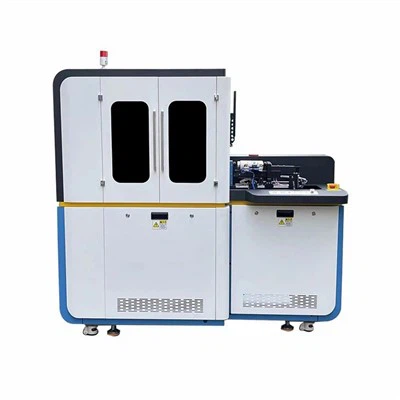
Cylinder printing is considered an “alternative” among the large family of UV printers. Traditionally printing cylindrical products is to print the straight surface first and then paste the cylinder. With the improvement of living standards and the development of science and technology, we need to print more materials and more shapes directly on cylinders or cones, so that the printed products will be more beautiful. Therefore, the cylindrical printer came into being because it is specially designed for cylindrical objects. Printers that print, such as thermos cups, wine bottles, etc. used in daily life, so cylindrical printers are often called thermos cup printers or wine bottle custom printers. Compared with other UV flatbed printers, the division of labor is completely different, but it is precisely because of their existence that the large “family” of UV printers can become more prosperous and powerful.
First of all, be sure to adjust the height when printing. If it is too high, the printed pattern will not be clear enough and there will be ink drag. If it is too low, it will easily scratch the nozzle and damage the body of the wine bottle custom printer, so Height is an important thing to pay attention to.
Secondly, the positioning must be accurate before printing. Unlike flatbed printers, cylindrical printers generally print a position on the paper first. Cylindrical printers print circles. These sample materials are mainly supported by rollers, so the position cannot be determined by positioning, and it is impossible to A circular shape is created, so you must pay attention when placing it.
Coating printing. The material printed by a cylindrical printer is usually not an ordinary bottle. It may be a glass bottle, a stainless steel water bottle or a thermos cup. At this time, it is recommended to use a coating of 4193. Of course, it must be meticulous. The coating application also needs to be determined based on the actual sample material.
The size of the printed sample pattern. Unlike flatbed printing, cylinder printing only needs to measure the width and height. It needs to measure the size of a cylinder, which requires more precise measurement. If the size data It is easy to make mistakes in printing, and the printed pattern will be very ugly. It may also damage the sample material and cause more harm than good.
UV Printing on Mugs
UV printing on mugs is a great option for personalizing this drinkware item. The UV printing method delivers stunning full-color images on cups, mugs, etc. Among the many merchandise items that benefit from UV printing, mugs are a popular canvas for expression. Mugs are not only excellent promotional products, but they are also used in our everyday lives. In this article, we will review UV inkjet inks for printing on mugs, their benefits, and the limitless opportunities for business use.
UV printing (digital inkjet printing) uses ultraviolet light to dry UV ink instantly upon exposure to UV light. Generally, UV inkjet ink cures 24 hours after drying. This printing process allows for digital prints on many substrates, including ceramics like mugs. Unlike screen or pad printing methods, UV printing is an efficient solution for on-demand and customized printing.
Pad printers deliver excellent one- or two-color logos on coffee mugs. Screen printing machines such as the S300C cylindrical screen printer deliver stunning one-color prints.
The benefits of UV printing on mugs include vibrant and full-color detailed prints, durability, quick turn-around, and unparalleled customization options. Learn how to print on silicone coated mugs.
There are two main challenges for digitally printing on mugs. The mug handle poses one of the challenges for printing on mugs. Additionally, the substrate (ceramic) poses a UV inkjet ink adhesion challenge. To solve this problem, UV adhesion promoters are needed to aid the ink in bonding to the ceramic mugs. Note: A UV adhesion promoter is not required for ink for pad printing on mugs.
A UV cylindrical inkjet printer is the best option for printing on cylindrical and tapered drinkware; however, printing on mugs requires a UV flatbed printer. UV flatbed printers are excellent for printing slightly curved surfaces. Ideal applications for flatbed printers include mint tins, golf balls, coolers, and many other promotional items.
The ability to print a full tray of mugs at once is one of the major advantages of UV flatbed printers. Additionally, it is possible to print different artwork on different mugs on the same tray. This feature is impossible with traditional methods such as screen and pad printing machines. To print on mugs, the Natron 314 UV inkjet ink is an excellent choice. The UV ink comes in CMYKWV. For equipment optioned with extra printheads, we also offer LC and LM for an extended color gamut. For permanent adhesion, use the Natron G1 UV adhesion promoter.
We could design the perfect fixture to get you started digitally printing on mags with a flatbed printer. Contact us today for custom fixturing. Our fixtures hold mugs securely during the printing process. The fixtures eliminate the ability for parts to shift while the flatbed travels from start to finish.
How to Heat Press a Mug in 5 Easy Steps
Now that you have an understanding of what mug pressing is, you will now learn how to use a mug press. If you want to present customized gifts to your loved ones, heat pressing is the answer.
Choose Your Design and Print It Out
So, the first step in mug pressing is picking a design that you want to see pressed on the mug. Make sure it's printed on sublimation paper with sublimation ink. This combo ensures your design doesn't fade away after the first wash.
Get Your Mug Ready for Its Makeover
Next, you don't need dust on your mug, so it is essential to clean it. A lint-free cloth should do the trick. Once it is cleaned, you can then cut out your design. Remember to leave just enough edge so you don't end up cutting too close to the design. It will be easier to position it on the mug.
Secure The Design in Place
This is a crucial step in getting your design correct. For getting a mug that is printed perfectly—the design needs to stay put. Use heat-resistant tape for this purpose. Wrap the tape tightly around the mug so the design doesn't move from the required position.
Set Up Your VEVOR Mug Press for Success
Now comes the important step: setting up your heat press machine. Follow the manufacturer's manual guide to understand how your machine works. Another thing to learn about is how long it takes to heat press a mug. The right mug sublimation temperature and time are crucial. For ceramic mugs, aim for about 400°F (204°C), but always check manufacturer recommendations.
Let The Magic Happen
Gently place your mug into the VEVOR press cradle. Once locked in properly, printing a mug typically takes between 60-240 seconds, depending on material thickness. When done, unwrap cautiously to avoid getting burnt as the mug gets hot during the process.
Our Factory
Champrint is a high-tech enterprise located in Longhua District, Shenzhen. It focuses on the R&D and manufacturing of UV inkjet printers, and has a complete sales and after-sales service system. Unlike traditional printing methods, uv printers can achieve no plate making, One piece of printing can quickly replace the pictures and print effects that need to be printed, so it can meet the growing demand for personalized customization and will be the future development trend.

