


Cylindrical Printer
What is Cylindrical Printer?
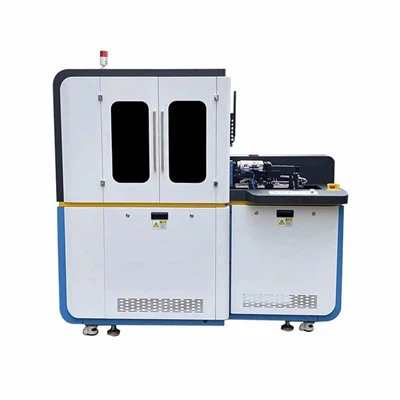
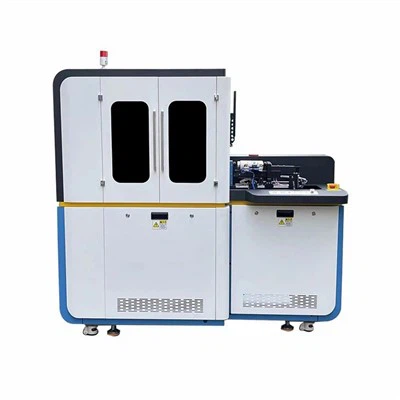
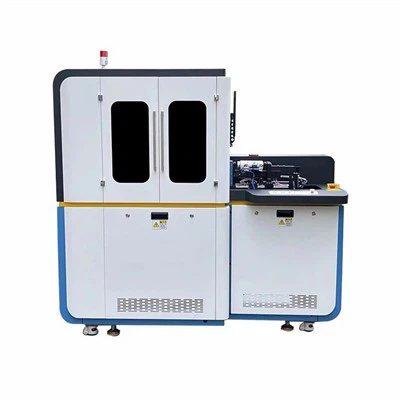
Cylindrical printers, also known as rotary UV printers or direct-to-bottle printers, are used to print high-quality, full-color graphics directly onto cylindrical objects.
Why Choose Us
Our Factory
We It focuses on the R&D and manufacturing of UV inkjet printers, and has a complete sales and after-sales service system.
Quality Control
High-precision marble platform is used for equipment calibration and inspection, micrometers, plug gauges, vernier calipers and other precise inspection tools are used for inspection and calibration.
Customer Service
We prioritize open communication to address our clients' specific requirements and deliver personalized solutions.
Technical Support
Our team of experts is available to assist with troubleshooting, answer technical inquiries, and provide guidance.






Advantages of Cylindrical Printer
360-Degree Printing
Printing on 360-degree surfaces becomes seamless by using cylindrical printers. They provide a professional and smooth appearance.
High-Quality Prints
This type of printer delivers high-resolution and full-colour prints with precision. As a result, designs appear sharp and vibrant on curved surfaces without distortion.
Efficiency and Speed
Cylindrical printing technology provides high precision, quick turnaround times, and fast production speeds.
Affordability
You can save money in terms of labour and time, unlike manual printing methods. Go for cylindrical printers for unmatched product elegance.
Durability
Cylindrical printers deliver high-quality prints that are durable, long-lasting, and resistant to fading.
Enhanced Product Value
Cylindrical printers allow customization to add value to products. Thereby, the products are distinctive and desirable to gain traction among consumers.
Scalability
Cylindrical printing technology is scalable and suitable for both small-scale and large-scale production. Whatever needs you have for your business, cylindrical printers are adaptable.
Customization
It is easy to customize with intricate details to print logos, graphics, and text directly onto products. So, the customization is advantageous for branding and promotional purposes.
How to Choose the Best Cylinder Printer for Your Needs
Cylinder printers are a specialized type of printer designed to print on cylindrical objects such as bottles, cans, tubes, and other round surfaces. The is a popular choice for many businesses and individuals, known for its performance and versatility.
Cylinder printers use different printing technologies like UV-LED, pad printing, or screen printing. Each technology has its own set of advantages and limitations.
High-resolution prints: The 360i provides highly detailed prints with resolutions up to 1440 dpi, ideal for intricate designs and sharp text.
Fast curing: UV-LED inks cure instantly, reducing the risk of smudging and enabling faster production times.
Environmentally friendly: UV-LED printing does not release volatile organic compounds (VOCs) and consumes less energy compared to other printing methods.
The ideal cylinder printer should accommodate a wide range of cylindrical objects with varying diameters and lengths. The 360i has an adjustable printing system that supports objects with diameters ranging from 1.57 inches to 5.9 inches and lengths up to 11.8 inches. This makes it highly versatile and suitable for printing on various objects such as bottles, cans, tubes, and jars. Factory support make large customized jig holders for larger cylinder objects too .
A cylinder printer should offer a wide range of color options to create vibrant, eye-catching prints. The 360i uses a 6-color ink system (CMYK, White, and Varnish), enabling you to produce full-color images, text, and logos with sharp details and excellent color accuracy. The white ink allows for printing on transparent or dark-colored objects, while the varnish adds a protective, glossy finish to the prints.
The 360i comes with user-friendly software and an intuitive touchscreen interface, making it easy to set up, operate, and monitor the printing process. Additionally, the printer features an automatic cleaning system that helps maintain the print head's performance and prolongs its lifespan.
Key Applications of Cylinder Inkjet Printers
Packaging and Labeling
One of the most common uses of cylinder inkjet printers is in the packaging and labeling industries. Companies often need to print information such as product descriptions, barcodes, or expiration dates onto their products' packaging. With a cylinder inkjet printer, businesses can efficiently print this information directly onto the containers, eliminating the need for adhesive labels, which can be expensive and time-consuming to apply.
Beverage Industry
The beverage industry relies heavily on the use of cylinder inkjet printers to create eye-catching designs and branding on their products. Whether it's printing logos on beer cans, wine bottles, or soda containers, these printers enable companies to create high-quality, full-color images that help their products stand out on shelves.


Personal Care and Cosmetics
In the personal care and cosmetics industries, cylinder inkjet printers are used to print product information, branding, and decorative designs onto tubes, bottles, and jars. The ability to print high-resolution images and text directly onto the packaging allows manufacturers to create visually appealing products that can compete in a saturated market.
Promotional Products
Customized promotional products, such as drinkware, pens, and USB drives, often require printing on cylindrical surfaces. Cylinder inkjet printers can easily handle printing on a wide range of materials and finishes, enabling businesses to create unique, high-quality promotional items that leave a lasting impression.
As technology continues to evolve, UV inkjet printers are being used in a wider range of applications, and many people are exploring how to use UV ink in UV inkjet printers.UV inkjet printers are specialised printers that are exposed to a UV light source, and are mainly used to process print materials that require the use of layers or other protective coatings.
Since UV inks do not contain any volatile organic solvents, they are also more environmentally friendly and safer to operate. Compared with traditional inkjet printing technology, UV inkjet printing technology can be adapted to a wider range of materials, including leather, can not, PVC board, acrylic board and so on.
UV inkjet printers can use UV ink has many advantages, UV ink can be printed on the material to form a layer of protective film, to avoid the image is scratched, fading, etc., compared with the traditional ink, UV inkjet printers used in UV inkjet printers can be directly in the print material solidified, without waiting for the drying process, the print out of the image is more vibrant, and even in the high humidity environment is not easy to print blurred. Discolouration and other problems. The printed image is more vibrant and less prone to blurring and discolouration even in high humidity environments. It can print on a variety of media, including glass, ceramics, metal, silk screen and other materials, greatly improving the versatility of the printer.
Compared to traditional inkjet printing technology, UV inks do not contain any volatile organic solvents, making them environmentally friendly and safer to operate, and UV inkjet printing technology can be adapted to a much wider range of materials, including leather, fabrics, PVC panels and more.
There are also some precautions for inkjet printers using UV ink.
1. If you do not use appropriate protective measures, the use of the process may cause some radiation damage to the human body
2. UV ink blocking issues also need to pay attention to, not for a long time without use or precipitation
3. UV ink prices are high, the operating costs are relatively high
Many people may think that UV ink can only be used on top of professional large mechanical printers, in fact, many home inkjet printers can also use UV ink, these printers usually need special ink cartridges and software to be compatible with UV ink, but once installed, the printer can generate high-quality images similar to those from professional printers.UV ink is actually a very useful ink that can be applied to different printers, including inkjet printers, and this ink creates durable, high-resolution images by using using UV light to harden during the printing process.
Digital vs. Flexo Printing
Flexographic printing, which is a type of relief printing, uses a laser-engraved sleeve to transfer ink onto paper. The presses run at a high speed, making them ideal for longer print runs. Flexo printing has been a relied-upon technique for many years, providing quality prints that are cost-effective and clear on a variety of substrates.
Over the last two decades, digital printing has become increasingly popular. Digital printing technology offers higher-resolution prints with greater color fidelity than traditional flexo methods. Digital printers also provide new capabilities such as variable data printing that allow for more customization options for businesses and individuals alike. However, when it comes to longer print runs, flexo provides the best speed and reliability.
When deciding between Digital and Flexo Printing, it is essential to consider:
Your production timeline
Color range for the image
The type of material you need to be printed
Understanding Flexo Printing
Flexo printing involves the creation of a raised design on an image carrier - typically a sleeve, cylinder, or plate that can be made of polymer or elastomer. The anilox roller takes ink from the inkwell and transfers it to the image carrier, which then applies the image to the substrate.
Substrates that utilize this method can be paper, flexible plastics, and other non-porous materials. This can range from film and labels to foil or other packaging materials.
Flexo printing is best used when it comes to large volumes of production over several days or weeks as it tends to be more economical in that sense than digital printing. This method is also more efficient in terms of speed and time spent from setup to completion of a print run.
Understanding Digital Printing
Digital printing is a process that involves the use of a digital image and specialized printers to transfer the image onto a substrate. The digital image is created on a computer with high precision and accuracy and then printed directly onto the substrate. Digital printing technology eliminates the need for plates or film used in traditional offset printing, making it faster and more efficient than other forms of printing.
The digital printers output images directly from a computer, scanning each pixel of the image as it prints. This allows for great detail, clarity, and accuracy in producing complex images on substrates such as paper, vinyl, fabric, film, foil, synthetic papers, and various boards. Digital printing also enables variable data printing – which allows different pieces of text or artwork to be printed in one pass without stopping or changing plates.
The advancements in digital printing have improved turnaround times and offered increased customization options to customers. With better quality prints at faster speeds, digital is a preferred method of choice for those looking for quick and effective commercial or personal printing solutions - in smaller batches.
Digital printing offers a higher degree of detail than flexo printing, resulting in better image quality and accuracy.
Digital vs. Flexo Printing | Summing Up
Digital offers speedier turnaround times and better detail while Flexo provides larger volume print runs at an economical cost. As for flexibility, both methods offer various options for different paper types and sizes but Digital is often more versatile when it comes to small orders on different substrates, while Flexo is the preferred method if you are relying on longer print runs, especially for an extended amount of time.
Our Factory
Champrint is a high-tech enterprise located in Longhua District, Shenzhen. It focuses on the R&D and manufacturing of UV inkjet printers, and has a complete sales and after-sales service system. Unlike traditional printing methods, uv printers can achieve no plate making, One piece of printing can quickly replace the pictures and print effects that need to be printed, so it can meet the growing demand for personalized customization and will be the future development trend.

